

Is It Genocide?
Is Israel committing genocide in Gaza? Let's look at what exactly constitutes a genocide and why the word "intent" is so important.
There hasn’t been a matter that has been at the center of more scrutiny than Israel’s war in Gaza. With the hunger crisis worsening and mass starvation imminent, more and more journalists and scholars are faced with a difficult question: Is this a genocide?
This article will look at the facts. What sparked the war? What exactly defines a genocide? How hard is it to prove a genocide? We will look at the definition of genocide, talk about the significant differences between war crimes and genocide, and look at experts’ opinions.
To begin, we have to go back to what started this war. Not what started the entire conflict between Israel and Palestine, but what started the current war: Israel’s ongoing military campaign in Gaza began after the terrorist attack on October 7th, 2023, where thousands of innocent Israelis lost their lives. The invasion of Gaza initially had a lot of public support and was criticized by almost no Western leaders. Why? Likely because, at that time, it had tangible goals it wanted to achieve.
The start of the war: Unjustified Criticism?
When Israel decided to invade Gaza, the government formulated two precise goals it wanted to accomplish:
Hunt down the architects of the Oct. 7th attack, most prominently Yahya Sinwar
Free the hundreds of hostages
These seemed like rationale goals. The second one is common in most hostage situations, the first one is a goal similar to America’s undertakings to find and kill Osama Bin Laden after the attacks on 9/11.
Why are Israel’s goals, their intentions so important? Because, when it comes to classifying something as genocide, nothing is more important than the intent.
Genocide Definition - The Importance of Intention
The definition of Genocide in Article II of the United Nations Genocide Convention of 1948 reads as follows:
“Genocide means any of the following acts committed with intent to destroy, in whole or in part, a national, ethnical, racial or religious group, as such:”
— United Nations, Genocide Convention, Article II
The listed acts include: Killing members of the group, causing serious bodily or mental harm, deliberately inflicting conditions of life calculated to bring about its physical destruction, imposing measures to prevent births, forcibly transferring children to another group.
There is broad evidence that Israel’s military actions have killed and injured many members of the national and ethnic group referred to as Palestinians. The most significant word in this definition, however, is the word intent.
To classify the mass killing of members of a certain group as a genocide, there needs to be a clear intention of the perpetrator to destroy that group. If a mass killing in war takes place, even a mass killing of civilians and children, but there wasn’t any intent to eliminate a certain group, the incident would likely fall into the category of a war crime.
War Crime vs. Genocide
Let’s illustrate this difference with two historical examples from the same war, WWII:
Genocide - Intention to (partly) destroy a group:
The Holocaust is perhaps the most prominent example of a genocide. Six million members of a specific group, people of Jewish faith, were murdered by the Nazis. The intention here is easy to prove, as the Germans kept records of meetings where they discussed their plans to eliminate the Jewish race.
War crime - No intention to destroy group:
To beat the Nazis in WW2, the British employed a tactic that they had long avoided: They started targeting civilians, with the goal of weakening German morale. They bombed the cities of Hamburg & Dresden, killing countless civilians, including women and children. Was it a genocide? No, because Churchill and the Allied forces never had the intention to eliminate a national/ethnic group. Acts like these are “just” war crimes.
A war crime is, of course, a criminal act that will be prosecuted by courts. Those who commit war crimes face dire consequences if the case goes to court. The British bombings in WW2 (the Germans did the same thing during the Blitz bombings) never saw any consequences as they were deemed a necessary evil to beat the Nazis, but let’s not stray away from the key point here:
There is a stark difference between a war crime & genocide, and that difference is the intention.
What Does This Mean for the War in Gaza?
As mentioned before, Israel stated specific military goals they wanted to achieve in Gaza. For scholars, journalists, and public opinion, these goals of eliminating Sinwar and freeing the hostages were valid military objectives. Allies criticized the mass killings and “indiscriminate bombings” of innocent civilians and demanded a more careful conduct of war, but for most, the objectives remained, as the hostages and Sinwar were still in Gaza.
Early "Genocide" calls were criticized for leaving these military goals, and thereby the so important intent, out of the picture. But starting November 2024, things changed.
First, the International Criminal Court (ICC) issued an arrest warrant for Israel's PM Netanyahu, most notably for possibly committing war crimes, but also for the accusation of crimes against humanity.
In December 2024, Amnesty International concluded, in an almost 300-page-long report, that Israel is committing genocide in Gaza.
Amnesty’s Accusation: Genocide & Inferred Intent
While the report is detailed and based on professional methods, it was criticized for its conclusion that Israel is committing genocide. That criticism was not without reason: At this point, you know that, in order to prove the genocide accusation, Amnesty International must have found the so essential intention, but this is where it gets tricky.
There is one thing the report proves: Israel committed numerous war crimes in Gaza. For the evidence, Amnesty’s experts personally visited sites of incidents and interviewed witnesses. War crimes are horrendous acts that prompted the ICC to issue the arrest warrant for Netanyahu. But as we know, they are different from the act of genocide in one key aspect: intent.
This is where the criticism of the report comes in. At the time, Amnesty had difficulty proving that Israel intended to eliminate the Palestinian national/ethnic group.
Proving intent can be difficult because not all criminal governments record, or speak publicly about, everything they think & want, like the Nazis did. That’s why we have the concept of inferred intent. If the intent is not clear through statements of the perpetrators, in this case, Netanyahu’s government, the intent can be inferred.
Think about it like a trial, where the accused denies that he intended to eliminate (parts of) an ethnic group and argues that it was “just” a war crime. There are no records of him ever voicing an intention to commit genocide, so what can the persecution do? It works the same way as murder trials work, where there often is no footage or witness of the act (for us, the intention), and the accused pleads “not guilty”. The jury then has to look at all the evidence, the circumstances, and the whole picture to determine whether the accused is guilty.
That’s how inferred intent works, but the method isn’t without its critics. It is not journalists, activists, or politicians who decide if an act was a genocide: It’s the International Court with its judges. Deeming something a genocide, a rare act, comes with tremendous implications. In the past, some judges have dissented over how well anyone can infer the intention of the perpetrator. Law experts have argued that intent should only be inferred if it’s the “only reasonable inference”.
With Israel’s case, they might one day have no other choice but to try and see if Israel’s intention can be inferred based on evidence as the only reasonable explanation.
This complicated concept of intent makes genocides the “hardest crime to prove.”
What is Israel’s Intent?
At that time, the beginning of 2025, inferring the intent would have been difficult. The fighting stopped as a hostage deal, drafted by US President Biden, had been reached. If Israel had stopped, it could have argued that their intent lay in their military objectives mentioned before. They could have argued that the countless civilian casualties were, depending on the incident, unwanted or war crimes. But even after Sinwar’s death, and the release of almost all hostages, the war didn’t stop, and now, public and allies alike are turning on Israel as the genocide accusations gain traction.
An important note: The number of people dying can be irrelevant to the Genocide definition. The murder on October 7th by Hamas could therefore equally be subject to the genocide label, if Hamas’ sole intent to eliminate the Israeli ethnic/national group can be proven. A German court once found an ISIS terrorist guilty of having committed Genocide for a single murder.
The Evidence Mounts
Today, opinions about Gaza have changed. Public opinion polls show that support for Israel’s conduct has plummeted. Israel’s allies have sharply rebuked Netanyahu for the situation in Gaza.
There are a few reasons for this development:
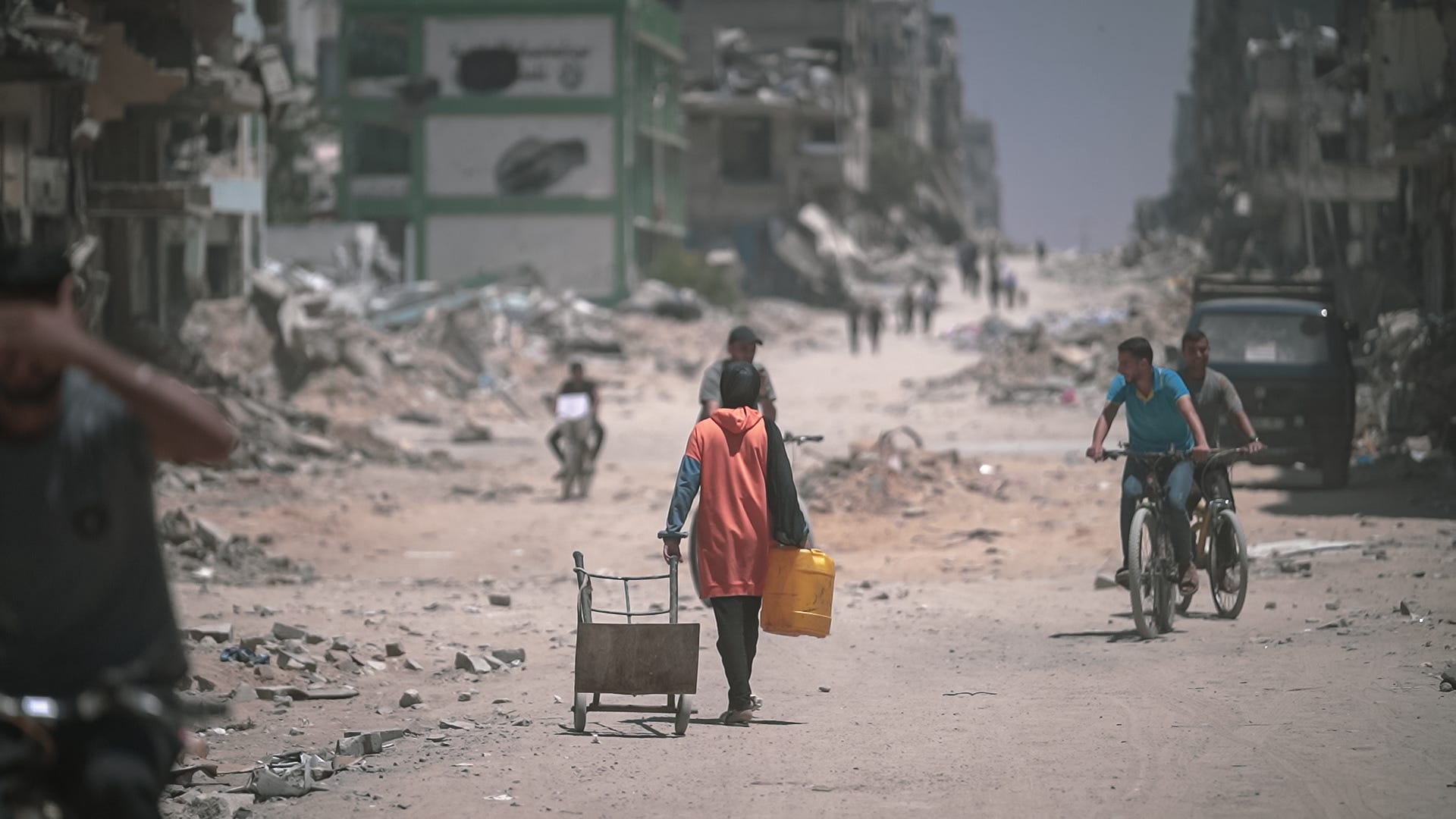
Civilian Deaths: Many innocent civilians continue to die even though most of Israel’s initial military goals have been achieved. A lot of deaths happen during food distribution, raising more questions about Israel’s intent.
The Bulldozers: The fact that one of Israel’s main weapons at the moment is a Bulldozer could mean that Netanyahu has little intention to let Palestinians return to their home.
Israel’s New Plans: This week, Israel announced that it would take over Gaza, violating international law and raising questions about the future of Palestinians.
Mass Starvation: Gaza is on the edge of a disastrous famine that could have been avoided. Even staunch supporters of Israel have argued that letting aid into Gaza should be the primary focus, but Netanyahu shows little willingness to do so.
All these aspects would be factors in a court’s elaborations about the big question of intent. This has not gone past the public, as prominent news outlets join the genocide discussion. At the same time, more and more international law experts are voicing their concerns, like Israeli-German law expert Itamar Mann, who told the Spiegel that he is “becoming increasingly convinced that Israel is committing genocide in Gaza.”
Politicians, in the meantime, are increasingly feeling the pressure to act. If, one day, a court should label the situation in Gaza a genocide, these countries might face scrutiny over their inaction. After the attacks on Israel on Oct. 7th, they were quick to aid Israel with the goal that such a war crime or genocide (the courts might have to decide in this case as well) will never happen again. Failing to hold Israel to the same standard that is evident in international law could weaken public trust. Regardless of how the genocide accusation plays out, Western leaders will be under pressure to respond to Israel’s newest plans to occupy Gaza.
Just as I am writing this, Germany, one of Israel’s most loyal allies, has announced that it will stop the export of arms to Israel in the wake of Netanyahu’s new plans in Gaza.